Kabasa - Best sofa factory in China, 15 years of leather sofa, fabric sofa manufacturing company.
Language
Kabasa - Best sofa factory in China, 15 years of leather sofa, fabric sofa manufacturing company.
The frame
Everything begins with the frame. It’s an assertion we heard several times over when we asked experts and retailers where to begin when searching for a sofa designed to be used daily and to hopefully last for years. The type of wood used for the frame and how each piece is joined not only determines a sofa’s durability, but will also be reflected in its cost.
If a sofa wiggles in the showroom, it will undoubtedly exhibit the same structural issues over time in your home, and MDF is prone to give up the ghost quicker.
Slower-growing, denser hardwoods like alder, poplar, maple, teak, and walnut are more expensive, but are generally considered more suitable for durable furniture, and will typically outlast faster-growing and economical softwoods like pine and Douglas fir, doing a better job of holding staples, nails, glue, and joinery in place. (“Hard” and “soft” have nothing to do with the hardness of the wood, simply distinguishing coniferous evergreens (soft)from deciduous (hard) trees .)
implores buyers to avoid any furniture constructed with MDF (medium-density fiberboard). “You’re not buying something designed to last, but renting disposable furniture that will fall apart in a year or two.” If a sofa wiggles in the showroom, it will undoubtedly exhibit the same structural issues over time in your home, and MDF is prone to give up the ghost quicker because the glued wood fibers don’t hold screws or staples like a dense wood does. Novak recommends frames built with engineered, furniture-grade plywood (“grade A”) as a stronger and more beautiful option to MDF.
Manufacturers commonly market their sofas with terms like “kiln-dried hardwood” and “FSC Certified”—a designation for wood sourced from responsibly managed forests. But Joshua Siegel of BSC Furniture told us that practically all commercial wood furniture made domestically uses kiln-dried lumber: “Kiln-drying is standard procedure done to remove all moisture to avoid the wood from warping … I can’t name a single company that doesn’t use kiln-dried wood,” said Siegel. “Same goes for FSC Certified wood and low VOC. They’re just buzzwords. Above a certain price range we’re all making FSC Certified sourced, low VOC, kiln-dried sofas.”
The strongest and most expensive frames are constructed using the labor-intensive and traditional technique of mortise-and-tenon joinery, connecting pieces of wood with precisely routed tabs (tenons) that fit into holes (mortises). Only the best and more expensive sofas (like those from handmade deluxu sofa couch) are made this way and you’ll hardly ever find a mortise-and-tenon-constructed sofa for under $2,000.
The suspension
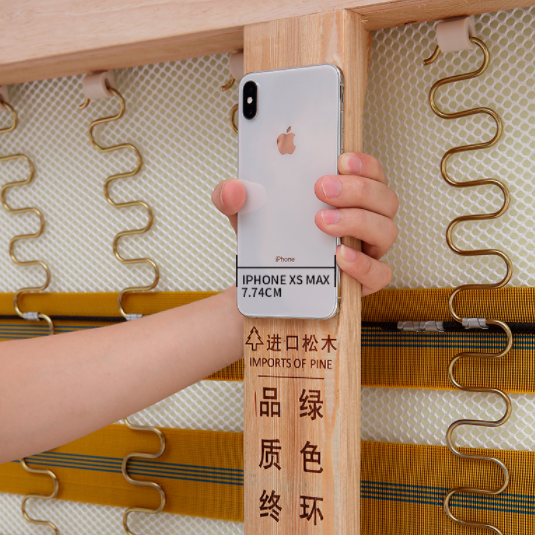
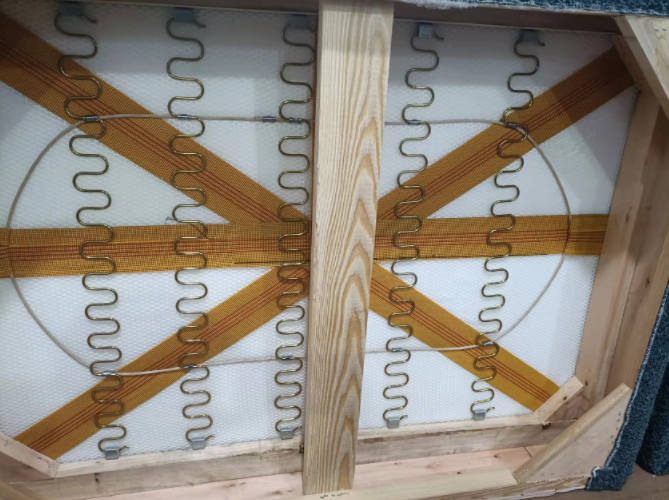
If the wood frame is the skeleton of a sofa, the springs stretched across it operate as the seat’s tendons and ligaments, weathering structural stress and preventing the cushions from flattening. Cushions may give a sofa shape, but it’s actually the springs that primarily determine its comfort.
Sinuous springs are the most common suspension system in mid-tier sofas. They’re made with heavy-gauge steel wires bent into a continuous line of vertical S-shaped coils. Horizontal metal tie rods reinforce the coils, inhibiting shifting and sagging, and are secured to the frame using padded clips and fasteners. I’ve personally owned two sofas for 14 years with a sinuous-springs system, and neither have shown any signs of sag or wear. They hit the sweet spot within the Venn diagram of comfort, affordability, and lasting durability.
When sitting on a spring-based sofa, listen for squeaks and creaks. Anything audible may indicate an improperly installed or loose spring.
The cushioning
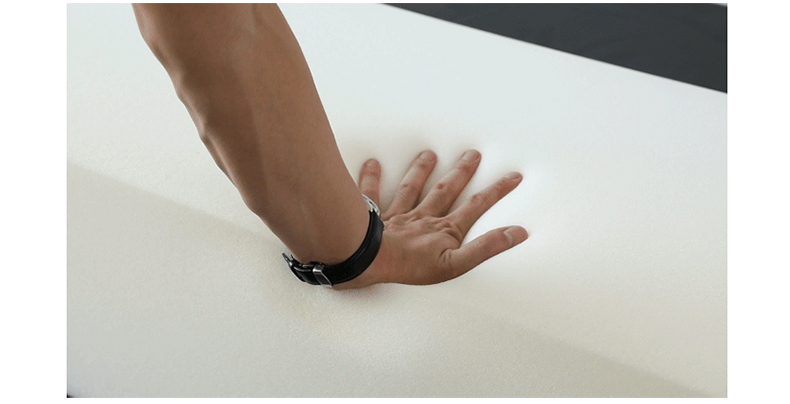
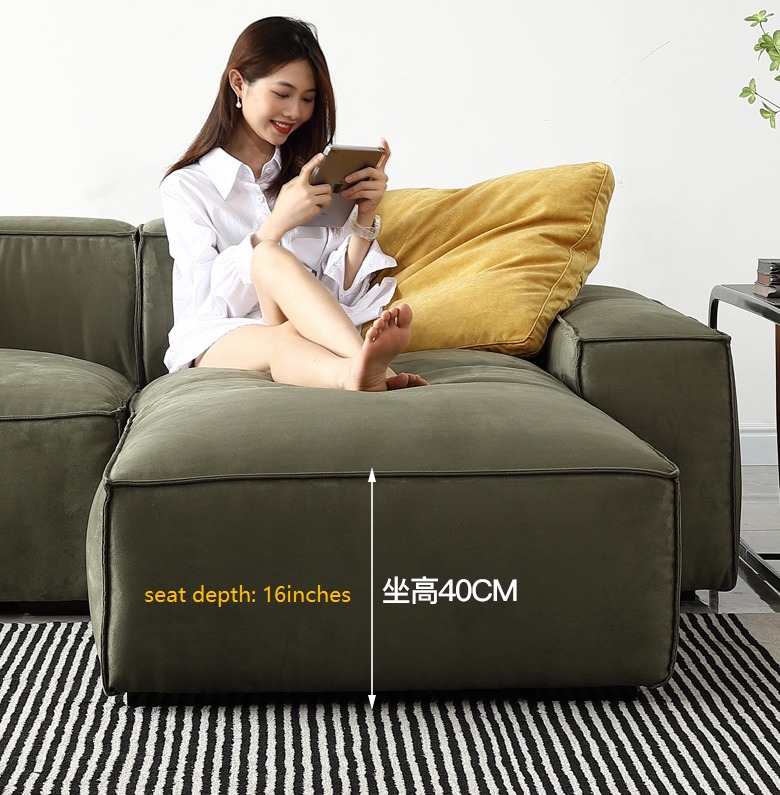
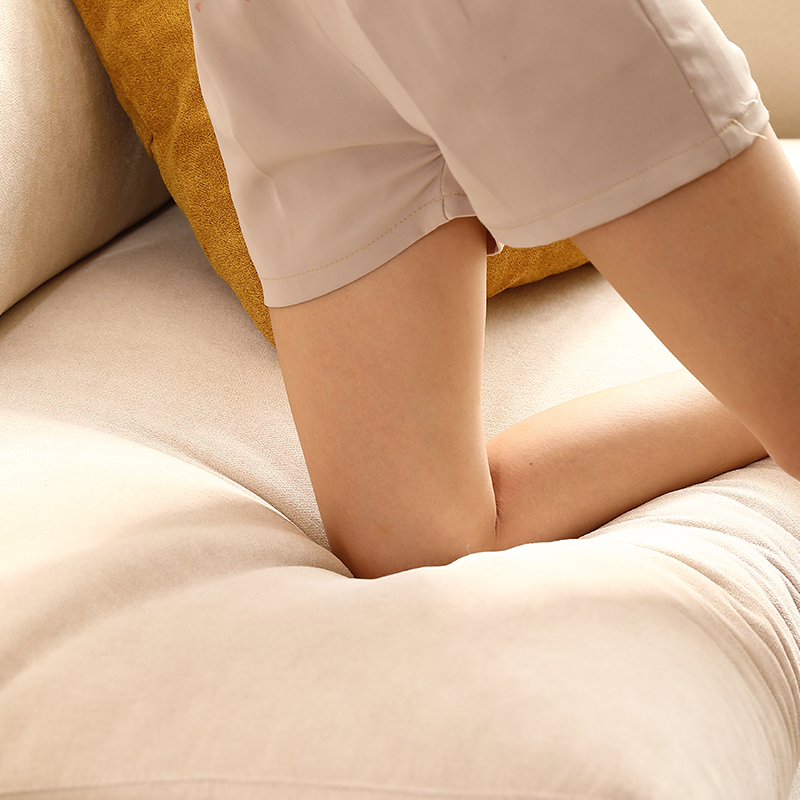
Beyond aesthetics, the subjective nature of cushions invites the widest (and most passionate) range of opinions when it comes to sofas. Some people love sinking into the upholstered embrace of a cushy-soft couch, others prefer a sofa with a firm feel and resilient shape. Identifying your preference will determine which of the following four cushion options you should consider:
Poly-wrapped foam: The majority of sofas manufactured today feature seat and back cushioning filled with layers of high-resiliency foam, a high-response material characterized by an open-cell structure, resulting in a supportive feel that dependably retains its shape over time (in contrast, a slow-response material like memory foam contours and deforms with use). A polyester wrap and a tight-weave down-proof ticking surround the foam center, resulting in a low-maintenance cushion that does not require fluffing.
Goose/duck down: You’ll find this naturally soft filling inside some of the most expensive sofas, filled either with 100 percent down (plush) or a down-blend encasing a foam core (slightly firmer) with a layer of down-proof ticking. Hammer & Heels’s Engman warns to check the down-to-feather ratio, so that you’re not paying for down when you’re getting mostly feathers, and recommends looking for cushions with channelled envelopes to keep down filling evenly dispersed. Even with sewn-in baffling, you’ll definitely need to rotate, flip, and fluff down-filled cushions regularly, as down has a tendency to flatten and clump with use. Just like a down bed pillow, 100 percent down will deform faster and require more fluffing. A 50-50 blend will likely be a little firmer and more affordable. Anyone allergic to feathers should avoid this option completely.
Innerspring core: This style of cushion is built directly into the frame—so the cushions aren’t removable. Individually pocketed coils wrapped in a layer of foam give this style of cushion more bounce to the ounce in comparison with any of the other options. Like an innerspring mattress, a sofa cushion’s durability is determined by the gauge of steel and how well it is attached to the frame. Be sure to listen for any immediate audible squeaks while seated; feel for any uncomfortable pressure points where the springs are misaligned.
Memory foam: The high density of memory foam ensures durability, but not everyone will like its form-fitting properties. It’s primarily found as a layer for sleeper sofas.
The upholstery
Never judge a book by its cover, and never pick a sofa solely by its fabric. That said, upholstery truly matters, as it’s what you’ll see and feel for years after purchase. If maintained with care, certain high-performance fabrics can last for over a decade. Both natural fibers and synthetics offer varying degrees of durability, with natural fibers generally revealing a richer depth of color, and synthetics exhibiting a smoother feel.
The legs
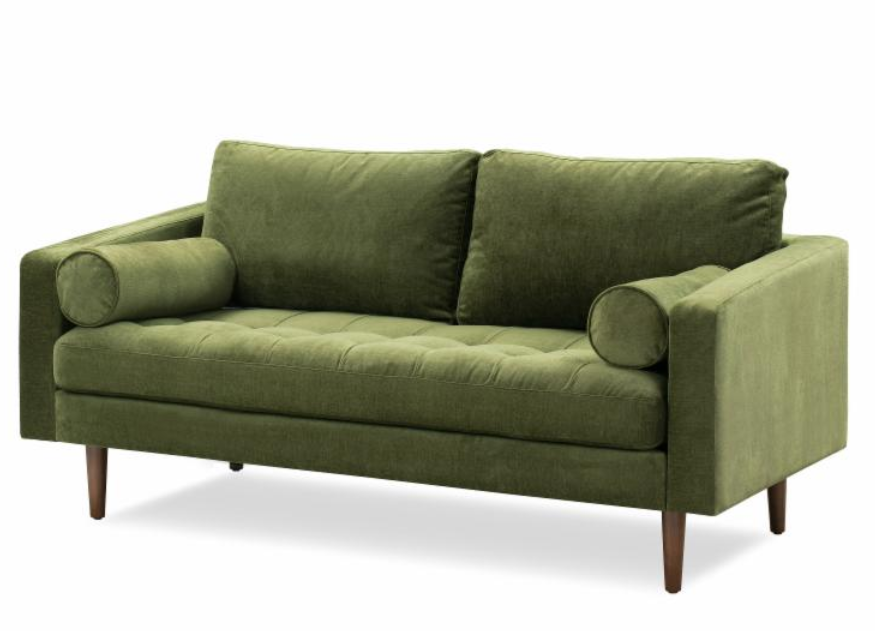
Years ago I made the mistake of purchasing a sofa outfitted with low, metal hairpin legs. They looked great in the showroom, which had impervious sealed cement floors. But they left my apartment’s original oak floors scraped like a 5-year-old’s knee after a skateboarding mishap. I was eventually forced to purchase carpet tiles to prevent further damage. Considering the material, diameter/surface area, and shape of sofa legs in relation to flooring ahead of purchase will prevent experiencing a similar “oh no” moment.
Sofa legs and feet are mostly made of wood, offering an opportunity to inspect a sofa manufacturer’s eye for grain and finish consistency. Check for uniformity in height and if the stain finish matches between feet and frame, and inspect each piece to confirm that it is securely fastened by getting down to the ground and giving each piece a pull, wiggle, and twist. Also ask if there are any uninstalled feet available for closer inspection. Avoid sofas with legs attached directly into the frame with screws—they’re susceptible to loosening over time under the duress of shifting bodies. Instead, look for legs and feet attached using thick threaded hanger bolts secured with T-nuts, which you can easily adjust or replace.